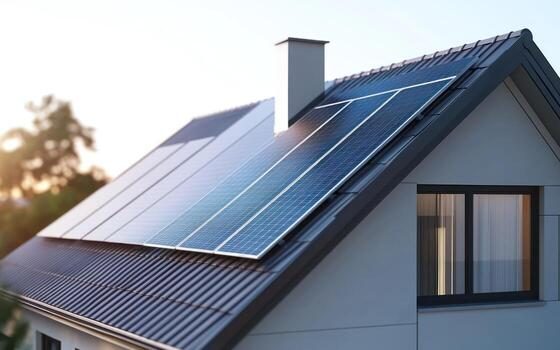
A roof and a solar array share the same piece of real estate. They also share risk. Get the sequence wrong and you can end up drilling through brand-new shingles, voiding a warranty, or paying to remove panels just to carry out a repair that should have been routine.
Homeowners usually think about these upgrades at different times: the roof when it starts to leak or looks tired, solar when energy costs climb. When the timelines overlap, there is a real advantage in treating them as a coordinated project.
Why the timing matters so much
Solar panels are designed to stay on a roof for a very long time, and removing and reinstalling them is labour-intensive. If your roof has only a few years of life left, mounting an array now means paying for that removal later — plus the cost of a new roof underneath, at whatever prices apply at the time.
Doing the roofing upgrade in advance, and planning it with solar in mind, removes that problem entirely. The roof is sound and warrantied, the mounting penetrations are made deliberately rather than retrofitted, and the array is fitted once.
Plan the roof for solar before the covering goes on
- Structure and load: the roof framing and sheathing should be inspected and repaired so they can carry panel weight and wind uplift comfortably.
- Layout: the array position determines where mounting points land, so decide the general panel zone early, along with any future expansion space.
- Roof covering choice: some coverings take mounting hardware more cleanly than others, and the standing-seam style gives you options that avoid penetrations altogether.
- Underlayment and flashing: upgraded underlayment and proper flashing detail around every penetration is what keeps water out for years to come.
- Ventilation and snow: ridge ventilation, soffit intake and snow guards all need to be laid out before solar panels claim the best roof planes.
What a solid roofing upgrade includes
A roofing upgrade is more than a new surface. The assembly underneath is what determines how long the roof lasts in a demanding climate:
- A condition survey that distinguishes what must be replaced from what can be repaired
- Removal and responsible disposal of the old covering
- Deck repair — replacing soft, delaminated or poorly fixed sheathing
- Upgraded underlayment and ice-dam protection at the vulnerable eaves
- Correct flashing at chimneys, valleys, skylights and sidewalls
- Balanced intake and exhaust ventilation to prevent condensation and overheating
- Gutters, drip edge and downpipes checked or renewed as part of the same visit
Ask any contractor the same question before signing: “If solar goes on this roof next season, what would you do differently now?” The answer tells you whether they are thinking about your whole project or just their own part of it.
What a solar upgrade should cover
- Shading assessment: trees, neighbouring buildings and seasonal sun angles all change what an array will produce.
- System sizing: matched to your actual consumption patterns rather than a generic package.
- Mounting and waterproofing: racking fixed with correct sealing and standoff so airflow and drainage are maintained.
- Inverter and isolators: located where they are accessible, protected and easy to service.
- Monitoring: set up and explained, so you can see generation and spot problems early.
- Maintenance guidance: what to check through the seasons, and what should be left to a professional.
The sequence that works
- Survey the roof and the electrical setup together, so all requirements are known up front.
- Confirm the roof specification, including any reinforcement and the mounting strategy.
- Complete the roof work, with photo records of the deck, underlayment and flashing.
- Install the solar array on the finished, inspected roof.
- Commission, monitor and hand over with warranty documents for each part of the job.
Following this order means the solar installer is working on a clean, known surface — and your roof warranty is not left in a grey area because someone else made holes in it.
Warranty and paperwork
Roof and solar warranties overlap in ways that are worth understanding before work begins. Keep a dedicated file containing the roofing specification, the array design, all invoices and the warranty documents. If you financed any of the work, keep the payment schedule there too — it makes conversations with insurers, lenders or future buyers far simpler.
If financing is on your mind, our home loan and warranty guidance explains the options in plain language, and our team is glad to talk it through before you commit.
When they should stay separate
Not every project benefits from bundling. If your roof is young and healthy, or if the array needs to go on a detached structure such as a garage or outbuilding, there is no reason to replace the covering early. The rule of thumb: if the roof has plenty of service life remaining and the mounting detail is sound, solar can be added on its own. If the roof is near the end of its life, bring the work forward instead of paying twice.
Where to go next
Upgrading the roof is also the perfect moment to look at the rest of your building envelope. Windows, insulation and ventilation all interact with the roof, and handling them together avoids scaffolding and disruption more than once.
If you would like an assessment of your roof, your solar potential, or how roof and array work together, our team would be glad to walk your property with you and put together a sensible plan.